

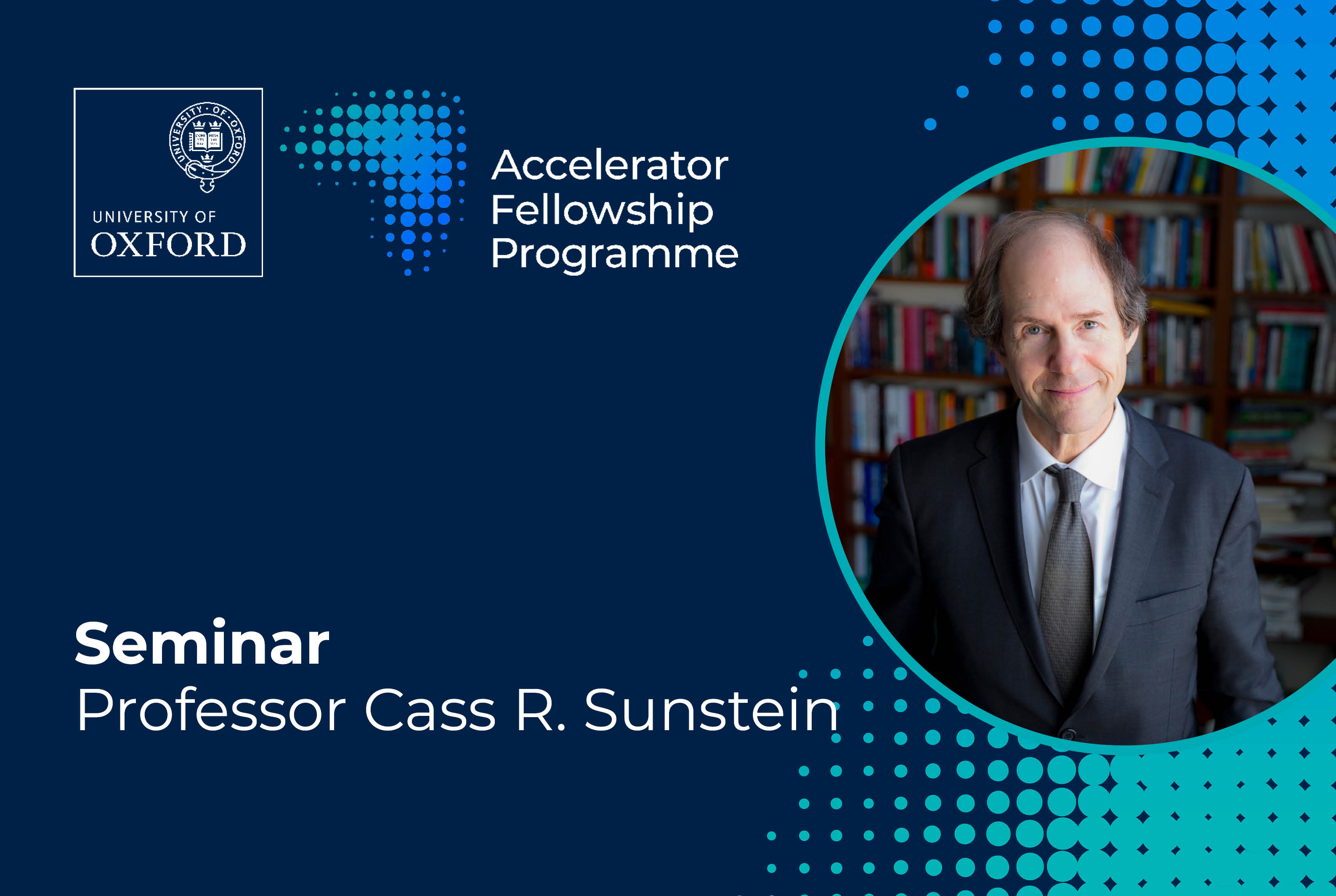
Hosted by the Accelerator Fellowship Programme at the University of Oxford
On 10 June Professor Cass R. Sunstein discussed the topic of 'agency' in his public seminar. A recording of the seminar is available to watch on the Institute for Ethics in AI's website here.
Many people prize agency; they want to make their own choices. Many people also prize second-order agency, by which they decide whether and when to exercise first-order agency. First-order agency can be an extraordinary benefit or an immense burden. When it is an extraordinary benefit, people might reject any kind of interference, or might welcome a nudge, or might seek some kind of boost, designed to increase their capacities. When first-order agency is an immense burden, people might also welcome a nudge or might make some kind of delegation (say, to AI, an employer, a doctor, an algorithm, or a regulator). These points suggests that the line between active choosing and paternalism can be illusory. When private or public institutions override people's desire not to exercise first-order agency, and thus reject people's exercise of second-order agency, they are behaving paternalistically, through a form of choice-requiring paternalism. Choice-requiring paternalism may compromise second-order agency. It might not be very nice to do that.