

Stuart Russell OBE
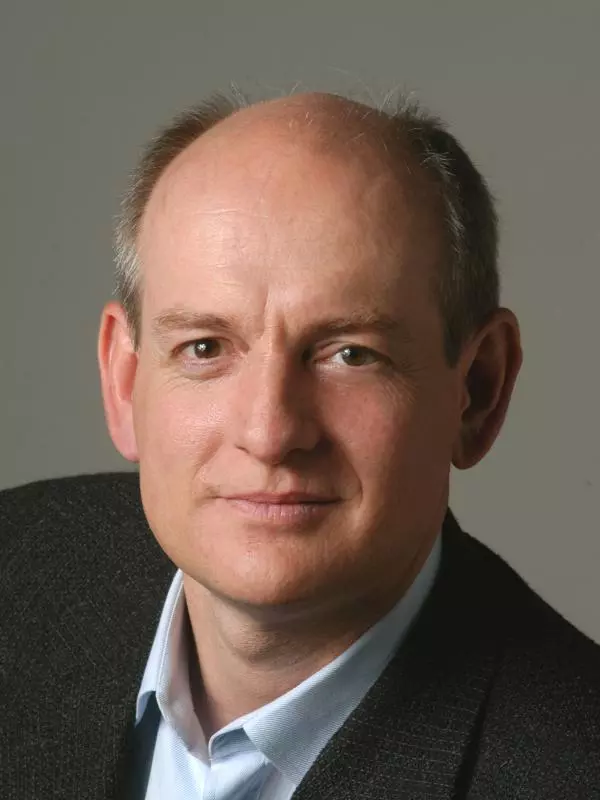
Stuart Russell OBE, FRS is a Distinguished Professor Emeritus of Electrical Engineering and Computer Sciences at the University of California, Berkeley; co-author of the standard textbook on artificial intelligence; and President of the International Association for Safe and Ethical AI (IASEAI).
Russell was born in Portsmouth in 1962 and grew up in London, Lancashire, and Birmingham. He attended St Paul’s School and read Physics at Oxford. He received his PhD in Computer Science from Stanford in 1986. He then joined the Berkeley faculty. He was Chair of Electrical Engineering and Computer Sciences and holder of the Smith-Zadeh Chair in Engineering. He currently directs the Center for Human-Compatible AI and the Kavli Center for Ethics, Science, and the Public.
He is a Fellow of the Royal Society and a member of the US National Academy of Engineering. In 2021 he was appointed OBE and gave the BBC Reith Lectures. His book Artificial Intelligence: A Modern Approach is the standard text in AI, used in over 1,500 universities in 135 countries. His 2019 book Human Compatible: Artificial Intelligence and the Problem of Control argues that the standard model of AI, in which machines optimise fixed objectives, is the source of the risk, and proposes an alternative based on machines that are uncertain about human preferences.
His current work addresses a central challenge: if AI succeeds in creating superhuman machines, we will face the problem of maintaining power, forever, over entities more powerful than ourselves. His proposed solution is to build assistance game solvers: machines whose only objective is to further human interests, but that are explicitly uncertain about what those interests are. Such machines are, in principle, provably safe and beneficial.
During the fellowship he will address major open problems with this approach, many of which are also unresolved in moral philosophy. These include how to aggregate the interests of multiple individuals on whose behalf an AI system acts; whether preferences for the future refer to mental states, physical states, or something else; how to act when one’s actions can affect who will exist; how to serve someone with malleable preferences without manipulating them to be easier to satisfy; whether to honour preferences that others have manipulated for their own gain; how to interpret behaviour that imperfectly reflects preferences; and how AI systems should preserve human autonomy, including the freedom to act contrary to our own best interests. Although some philosophers doubt these questions can be resolved for human moral choices, the situation for AI designers may be easier, partly because AI systems have no interests of their own.
He is an honorary fellow of Wadham College, Oxford; a distinguished fellow of the Stanford Institute for Human-Centered AI; an associate fellow of the Royal Institute of International Affairs (Chatham House); and a fellow of AAAI, ACM, and AAAS. He lives in Berkeley and Paris and is married to Loy Sheflott; they have four children.
Further information
- Stuart Russell's personal website
- International Association for Safe and Ethical AI
- Center for Human-Compatible AI
Contact
Email address: aiethicsafp@philosophy.ox.ac.uk